
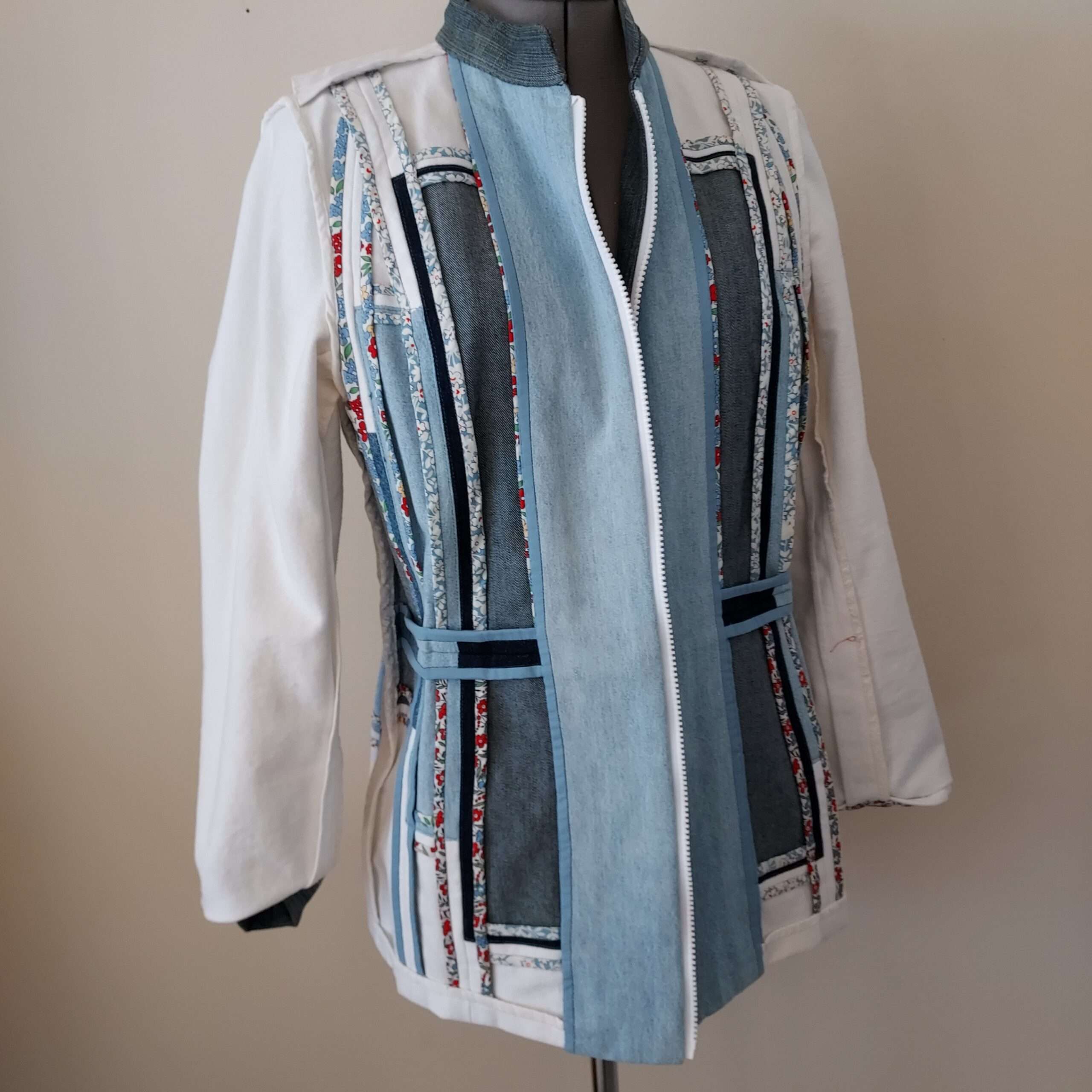
If you’ve ever opened a beautifully made jacket and noticed the inside looked as refined as the outside, you’ve likely seen a Hong Kong seam finish.
This couture technique wraps the raw edge of a seam allowance in bias tape, creating a clean, polished interior — especially useful for unlined or partially lined garments.
It’s practical. It prevents fraying. And once you learn it, you’ll use it constantly.
What Is a Hong Kong Seam?
A Hong Kong seam is a seam finish where the raw edge of each seam allowance is bound with bias tape.
Unlike a fully bound seam (where both allowances are enclosed together), a Hong Kong finish:
-
Presses the seam open
-
Binds each seam allowance separately
-
Leaves a clean, lightweight finish
It’s ideal for:
-
Unlined jackets
-
Skirts with partial lining
-
Lightweight trousers
-
Medium-weight fabrics that feel too bulky for full lining
It prevents fraying while keeping the garment breathable and structured.
What You’ll Need
To practice a Hong Kong finish, gather:
-
Bias tape or bias strips (1 1/4″–1 1/2″ wide is ideal for most seam allowances)
-
Matching thread
-
Two fabric scraps (6″ x 6″ pieces work perfectly for practice)
-
Pins or clips
-
Iron and ironing board
-
Thread snips
-
Straight ruler
-
Optional but highly recommended: a tailor’s clapper
Choosing the Right Bias Tape
Bias tape quality matters more than most sewists realize.
You’ll typically encounter:
-
Lower-quality store-bought bias
Sometimes too flimsy or translucent, which can ripple when stitched. -
Self-made bias strips
Cut on the 45° angle of your fabric — perfect when you need an exact color match. -
Higher-quality store-bought bias
Often the most reliable — stable enough to stitch cleanly while still folding smoothly.
The bias should:
-
Hold its shape
-
Fold easily around the seam allowance
-
Not fight curves
-
Not ripple under stitching
How to Sew a Hong Kong Seam (Step-by-Step)
Step 1: Sew and Press the Seam Open
Stitch your seam normally with right sides together.
Press the seam allowance open so it lies flat.
Flat pressing at this stage prevents bulk later.
Step 2: Attach the Bias to One Seam Allowance
-
Align the raw edge of the bias tape with the raw edge of one seam allowance.
-
Stitch approximately 1/4″ from the edge.
-
Backstitch at beginning and end.
Step 3: Press and Trim (Optional)
Press the bias away from the seam allowance.
If your fabric is bulky, trim about 1/8″ from the seam allowance edge before wrapping to reduce thickness.
Step 4: Wrap the Bias
Fold the bias over the raw edge of the seam allowance to the underside, fully encasing the edge.
Press to hold the fold in place.
Step 5: Stitch in the Ditch
From the right side of the garment, stitch in the ditch — directly next to the seam where you attached the bias.
This secures the folded edge underneath.
Go slowly around curves and backstitch to secure.
Repeat for the other seam allowance.
Two Secrets to a Truly Beautiful Hong Kong Finish
1. Pressing at Every Stage
Pressing determines whether this finish looks couture or homemade.
Press:
-
After sewing the seam
-
After attaching the bias
-
After wrapping the bias
For the flattest result, use a tailor’s clapper after steaming. Place it over the seam for 5–10 seconds while it cools. This sets the fibers and prevents ridging.
Use this especially on:
-
Side seams
-
Jacket seams
-
Any visible interior seam
2. Match Bias Weight to Fabric
If the bias is too flimsy, it ripples.
If it’s too thick, it resists curves and adds bulk.
Choose bias that supports — not dominates — your fabric.
Where Hong Kong Seams Shine
This finish is particularly effective on:
-
Unlined jackets and toppers
-
Skirts with partial lining
-
Lightweight trousers
-
Garments where the interior may be visible
Using a contrasting bias color is a subtle designer detail that elevates the garment without adding complexity.
Practice Before You Use It in a Garment
This technique improves dramatically with repetition.
Practice on scrap fabric until your hands learn the rhythm:
Stitch → Press → Wrap → Stitch.
Once you understand the flow, it becomes second nature.
Where You’ll See It Used in Our Patterns
The Hong Kong seam appears within select construction steps inside the Design Secrets program — particularly in Module 6: Camelot — The Poised and Polished Designer.
The Camelot Skirt and Camelot Blazer incorporate this finish in areas like the side seams, where a clean, bias-bound interior enhances an unlined design.

Recent Posts
Versitile Pattern for Intermediates or Advanced Sewists We love the possibilities of this pattern. Intermediates can enjoy this pattern by sewing just the outside layer of this pattern in a light...
Womens and Women's Plus Sized Blouse: The Monique Long Sleeved Blouse
Easy Women's Regular Sizes and Plus Sized Sewing Pattern 6-14 and 14X-24X Women's Blouse Features Easy Construction Jersey Knit Or Woven with Elastine Shirring Cuffs Option Drop...